
Complete Your Project Today with Flexible Financing!
How Window Style and Material Choices Shape Your Budget
The first decision that impacts your window replacement budget is choosing the right combination of style and material. In Cincinnati, the most popular choice remains the double hung window, typically priced between $450 and $750 per unit installed. These classic windows suit the historic architecture common throughout neighborhoods like Hyde Park and Mt. Lookout, and their tilt-in sashes make cleaning straightforward for two-story homes.
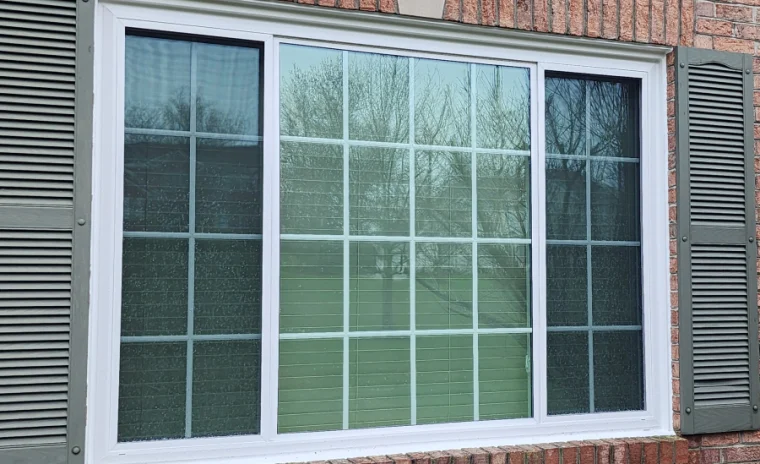
For homeowners seeking energy performance without sacrificing curb appeal, casement windows run slightly higher at $550 to $850 installed. Their crank operation creates a superior weather seal, particularly valuable during Cincinnati’s cold January winds when temperatures regularly drop below freezing. Picture windows offer the most affordable option for fixed openings, ranging from $400 to $650, and they work beautifully in living rooms with southern exposure, capturing natural light without the mechanical complexity of operable sashes.
Bay and bow windows represent the premium end of the spectrum, often costing $1,800 to $3,500 installed due to their structural requirements and multi-panel construction. These architectural features add significant value in established Cincinnati neighborhoods where character matters. Slider windows fall in the mid-range at $500 to $800, popular for ranch-style homes built in the 1960s and 70s throughout Butler and Warren counties.
Material selection carries equal weight in your final cost. Vinyl remains the practical choice for most Cincinnati homeowners, offering durability against humidity fluctuations and requiring zero maintenance. Fiberglass costs 15 to 20 percent more but delivers superior strength and the most authentic wood appearance. Traditional wood windows, while beautiful, demand ongoing maintenance and start at nearly double the vinyl price point, though they remain the preferred choice for designated historic properties.
What the Per-Window Price Does Not Tell You
Most homeowners focus exclusively on the quoted window price, but a realistic budget accounts for several additional line items. Labor typically represents 30 to 40 percent of your total project cost in the Cincinnati market. A standard installation on new construction windows in straightforward openings runs $150 to $250 per window, while retrofit installations in existing frames cost slightly less at $100 to $175 per opening.
Removal and disposal of old windows adds $50 to $100 per unit, a necessary expense that many initial quotes exclude. Homes built before 1978 may require lead-safe practices during removal, increasing disposal costs by an additional $75 to $150 per opening depending on testing results and containment procedures required by Ohio EPA regulations.
Structural surprises emerge in roughly 20 percent of replacement projects. Water damage around older window frames, particularly on north-facing exposures that see less sunlight, often requires sill replacement or framing repair. Budget a contingency of 10 to 15 percent for these discoveries. A rotted sill replacement runs $200 to $400 per window, while more extensive framing work can reach $500 to $800 if wall studs need sistering or replacement.
Cincinnati requires building permits for window replacement projects, typically costing $50 to $150 depending on project scope and jurisdiction. Hamilton County suburbs often process permits faster than the city proper, but budget two to three weeks for approval regardless of location. Finally, exterior trim, interior casing upgrades, and finish carpentry add $75 to $200 per window when homeowners want a polished, seamless appearance that matches existing millwork.
Turning Your Window Investment Into Long-Term Value
Full-home window replacement often totals $8,000 to $18,000 for a typical Cincinnati residence, making financing an important consideration. Many homeowners use home equity lines of credit, currently averaging 7.5 to 9 percent APR in the greater Cincinnati market, allowing you to borrow against existing home value while deducting interest on your federal tax return for qualified improvements.
Manufacturer financing programs frequently offer promotional periods with deferred interest, giving homeowners 12 to 24 months to pay the balance without accruing charges. Read the terms carefully, as any remaining balance after the promotional period typically incurs retroactive interest at rates of 18 to 24 percent. Personal loans represent another path, though rates run higher at 9 to 14 percent for borrowers with strong credit.
Ohio homeowners benefit from federal energy tax credits when installing ENERGY STAR certified windows. The current credit allows you to claim 30 percent of the project cost, up to $600 annually, directly reducing your tax liability. Duke Energy customers in Cincinnati may qualify for additional rebates of $50 to $100 per window when upgrading to high-efficiency models, though program availability varies by season and funding levels.
Consider the return on investment beyond immediate comfort. Quality window installation service recoups 70 to 75 percent of cost at resale in the Cincinnati market according to recent appraisal data. Homes in desirable school districts like Mason and West Chester see even stronger returns, as buyers prioritize move-in ready properties with recent updates. Energy savings compound over time, and improved curb appeal positions your property advantageously when the time comes to sell.
How Modern Windows Cut Your Monthly Operating Costs
Cincinnati’s climate demands windows that perform across temperature extremes. January lows average 22 degrees Fahrenheit while July highs reach 86 degrees, creating a 64-degree swing that older single-pane windows simply cannot handle efficiently. Homeowners replacing 1980s-era double-pane windows with modern low-E, argon-filled units typically see annual heating and cooling savings of $250 to $450 for a 2,000-square-foot home.
The U-factor measures how well a window prevents heat loss, with lower numbers indicating better insulation. Older windows often register U-factors of 0.50 or higher, while new construction windows with advanced coatings achieve 0.25 to 0.30, cutting heat transfer in half. During Cincinnati’s cold months when natural gas furnaces run continuously, this difference translates directly to lower Duke Energy bills.
Solar Heat Gain Coefficient (SHGC) matters equally during summer. Cincinnati receives moderate sun exposure, making an SHGC of 0.25 to 0.30 ideal for most exposures. Southern-facing rooms benefit from lower SHGC values to reduce air conditioning load during June through August when humidity already strains cooling systems. Northern exposures can use slightly higher SHGC values to capture passive solar heating during winter months.
Pairing new windows with proper installation techniques maximizes efficiency gains. Air sealing around the frame, using low-expansion foam and quality flashing, prevents the infiltration that undermines even the best window specifications. When combined with insulated vinyl siding on exterior walls, homeowners create a thermal envelope that reduces energy waste and improves comfort in every room, eliminating the hot and cold spots common in older Cincinnati homes.
From Initial Quote to Installation Day: What to Expect
A typical window replacement project begins with an in-home consultation where precise measurements determine accurate pricing. Expect this appointment to last 60 to 90 minutes as the installer assesses each opening, notes any structural concerns, and discusses style preferences. Cincinnati homes built before 1950 often have non-standard sizes that require custom fabrication, adding two to four weeks to the manufacturing timeline.
Standard-size windows ship within two to three weeks during off-peak months, while spring and early fall see longer lead times of four to six weeks as demand peaks. Cincinnati homeowners planning projects should avoid the September rush when everyone wants windows installed before heating season begins. Late winter and early summer offer the best combination of availability, competitive pricing, and favorable installation conditions.
Installation itself takes one to two days for a typical 10 to 15 window project, depending on accessibility and complexity. Ground-floor installations proceed faster than second-story work requiring staging and additional safety measures. Weather plays a role in scheduling, as installers need dry conditions and temperatures above 40 degrees for proper sealant curing. Cincinnati’s unpredictable spring weather sometimes requires flexibility in your schedule, so avoid planning installations immediately before major events or houseguests.
Choosing qualified installers protects your investment and ensures warranty coverage remains valid. Look for contractors licensed in Ohio, carrying current general liability and workers’ compensation insurance. References from recent local projects, ideally in your neighborhood, provide the best indication of quality work. When you are ready to move forward with confidence, professional window installation service providers can guide you through product selection, financing options, and scheduling that fits your timeline and budget.
